Introduction
In emergency scenarios, the ability to recognize signs of no breathing can imply the distinction in between life and death. Recognizing just how to evaluate a casualty's condition promptly and successfully is crucial for any person that might discover themselves in a rescue scenario. This article digs deep into the vital facets of recognizing no breathing, going over important strategies, procedures, and the value of preserving composure throughout a dilemma.
When confronted with a subconscious individual, knowing what to seek and exactly how to react can save lives. This detailed guide will deal with different components of emergency situation feedback, from fundamental vs sophisticated life assistance to public defibrillator usage, guaranteeing that every rescuer is fully equipped with knowledge.
Identifying No Breathing: Indicators Every Rescuer Have To Recognize
Identifying no breathing is an essential ability every rescuer should have. When someone is unresponsive, assessing their breathing should be your very first step. An individual may show up lifeless; however, it's important not to leap to conclusions without doing a complete evaluation.
Understanding the Basics of Checking Responsiveness
When coming close to a casualty, your very first job is examining responsiveness. You can do this by carefully trembling their shoulders while noisally asking if they are fine. If there's First Aid training Gold Coast no action after numerous efforts, you should proceed with examining their breathing.
Key steps consist of:
Safety First: Guarantee the environment is safe for both you and the casualty. Call for Help: If the individual is less competent and not breathing typically or at all, call emergency solutions or ask another person to do so. Positioning: Carefully position the casualty on their back on a firm surface.Evaluating Breathing in Emergency Situations
Once you've developed that the individual is unresponsive, it's time to inspect if they're breathing.
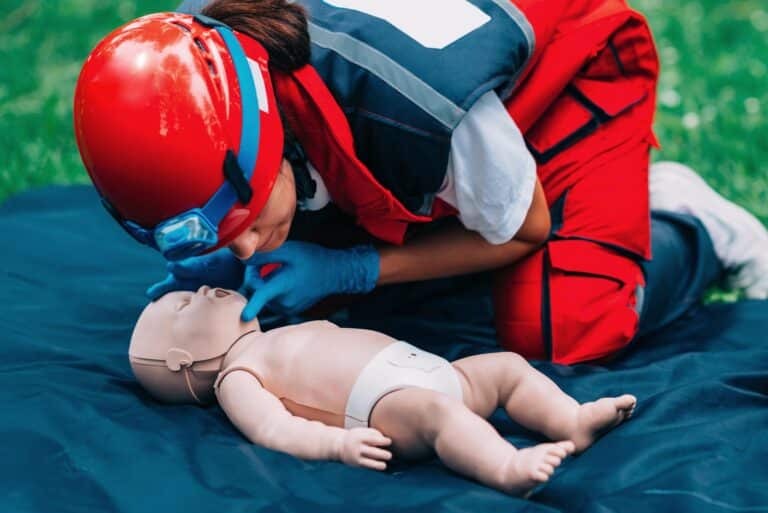
Look: Observe the breast for any increase and fall. Listen: Place your ear close to their mouth and nose; pay attention for breath sounds. Feel: Put your cheek near their mouth to really feel for breath.If you identify no indicator of breathing within 10 secs, initiate mouth-to-mouth resuscitation immediately.
Signs of No Breathing
The lack of regular breathing can materialize in numerous ways:
- The chest remains motionless. There are no audible breaths. The individual doesn't show indications of gasping.
Recognizing these indicators promptly allows you to act without delay-- important factors in enhancing survival prices during cardiac events.
Basic vs Advanced Life Assistance Techniques
It's vital for rescuers to recognize various degrees of life assistance when taking care of breathing emergencies.
What Is Basic Life Support (BLS)?
Basic life assistance includes necessary skills like mouth-to-mouth resuscitation and choking alleviation techniques that anyone can learn with BLS accreditation courses. It concentrates on preserving circulation till sophisticated care arrives.
Components of BLS
- Chest compressions Rescue breaths Automated external defibrillator (AED) usage
Advanced Life Support (ALS)
Advanced life assistance includes much more complicated medical interventions usually performed by medical care specialists. It includes:
- Intubation Medication administration Advanced monitoring equipment
While most individuals will just require BLS abilities in emergencies, understanding ALS concepts helps you appreciate the wider context of emergency care delivery.
Public Defibrillator Usage
In instances where heart attack occurs because of absence of breathing, using an AED can significantly improve survival chances.
How Does an AED Work?
An Automated External Defibrillator examines heart rhythms and delivers shocks if necessary to re-establish effective heartbeats:
Power it on. Attach pads according to aesthetic instructions. Follow audio motivates till EMS gets here or the victim reveals indications of recovery.Importance of Public Gain access to AEDs
Having available public defibrillators increases community durability versus abrupt heart attack events by empowering daily citizens with lifesaving devices!
Maintaining Composure During Emergencies
In high-stress circumstances, remaining calmness is critical for reliable action. Panic can shadow judgment and slow down required responses.
Tips for Remaining Calm
- Take deep breaths before engaging. Focus on clear activities as opposed to frustrating emotions. Remind on your own that every second counts; acting emphatically saves lives!
Taking Activates Compressions: The Value of Teamwork
When numerous rescuers exist, taking turns carrying out breast compressions takes full advantage of performance while minimizing tiredness-- vital throughout long term resuscitation efforts!
How To Rotate Efficiently
Establish a clear interaction method (e.g., "switch!"). Switch every 2 mins or when exhaustion establishes in. Make sure compressions continue to be continuous throughout transitions.Finding the Right Compression Depth and Rate
Proper compression depth and rate are important for effective mouth-to-mouth resuscitation that flows blood effectively:

Compression Depth
The advised deepness for grown-up sufferers goes to the very least 2 inches however not going beyond 2.4 inches while making sure adequate recoil after each compression.
Compression Rate
Aim for a rate in between 100-- 120 compressions per min-- this correlates with songs like "Stayin' Alive" by Bee First Aid Courses in gold coast Gees!
Hospital Codes and Procedures Associated With Respiratory System Emergencies
Every healthcare facility has details codes that alert staff concerning respiratory system emergency situations-- understanding these codes can promote quicker reactions:
|Code|Description|| ------|-------------|| Code Blue|Medical emergency needing instant focus|| Code Red|Fire alarm/evacuation method|| Code Orange|Harmful materials incident|
Familiarity with these codes enhances sychronisation among health care teams during crises!
FAQs Concerning Identifying No Breathing
What needs to I do if I'm unsure whether somebody is breathing?- If unsure, always think they're not; start CPR immediately!
- Yes! A lot of AEDs have pediatric pads available-- comply with tool instructions accordingly.
- It's advised every 2 years; guidelines progress frequently!
- Yes! Utilizing proper personal protective equipment (PPE) decreases dangers while providing essential aid.
- While inappropriate method might minimize performance a little, any effort at mouth-to-mouth resuscitation considerably enhances survival opportunities compared to doing nothing!
- Training isn't necessary however extremely motivated; lots of public places supply instructional sessions!
Conclusion
Identifying no breathing is just one of those essential skills that call for practice and confidence-- a mix that comes from training like BLS certification training courses paired with real-world experience in managing emergency situations properly!
Always remember: Every 2nd issues when responding! By finding out just how best to evaluate casualties swiftly while applying ideal methods like taking turns on compressions or acknowledging healthcare facility procedures-- even using public defibrillators-- we end up being encouraged helpers all set when others require us most!
Stay prepared; stay informed-- and don't be reluctant! You might just conserve a life today!